

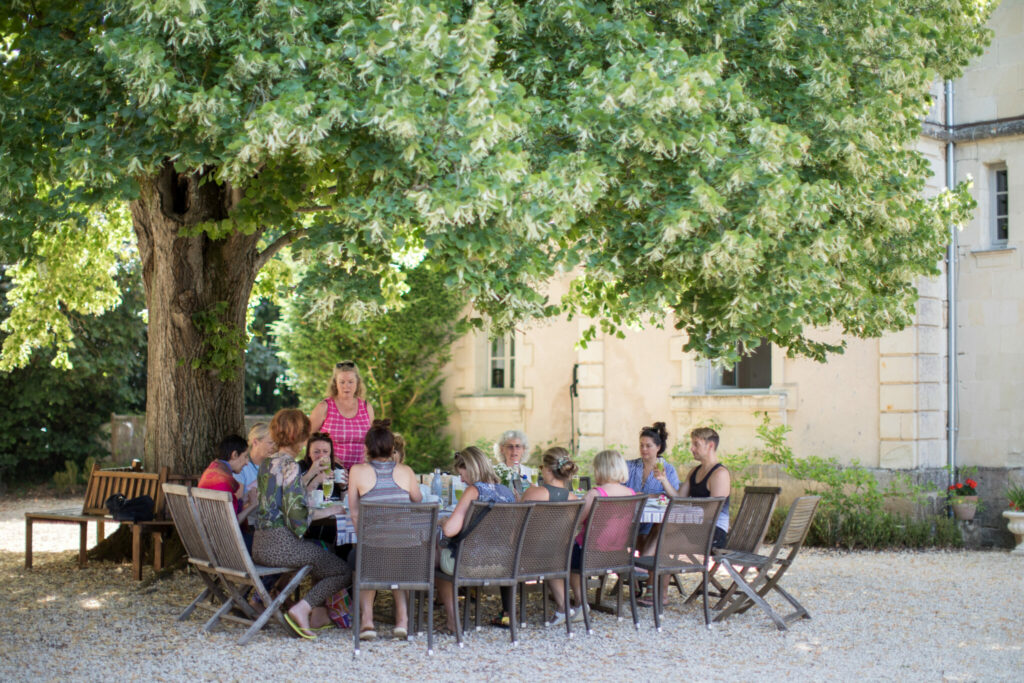
I’ve noticed something interesting over the years when hosting my wellness retreats, when it comes to women’s health and stress.
Within a day, the same subtle shift tends to happen. Shoulders drop. Sleep improves. Energy comes back. Digestion settles. Conversations slow down and laughter becomes a little easier.
This may sound implausible, particularly as nothing extreme has taken place. There’s no restrictive diet, no punishing workouts and definitely no complicated wellness protocols…that’s not The May Way!
It’s just SPACE.
Space to move, breathe, eat well and momentarily step away from the constant mental juggling that so many women carry every day. It’s a reminder of how quickly the body responds when we remove the constant background stress that modern life creates.
It always makes me think about the quiet health issue that I know many women are dealing with, which is blocking their ability to achieve their health goals. It’s not a lack of willpower or discipline, but something far less obvious: chronic stress and overload.
Women are remarkably good at managing life. Whether it’s work commitments, family responsibilities, social obligations, or the endless logistics of everyday living, we don’t drop those balls easily. But beyond the visible tasks is something researchers increasingly recognise as the mental load; that’s the background planning, remembering and anticipating that rarely switches off. We’re rarely “off-duty” from being a woman!
How is women’s Health and Stress recognised in the body?
From a physiological point of view, the body doesn’t really distinguish between a looming work deadline, poor sleep, emotional strain or a schedule that never quite pauses. It simply recognises stress.
When that stress becomes constant, the nervous system spends more time in what’s known as a sympathetic state; the familiar “fight or flight” mode designed to help us respond quickly to challenges.
In small doses, this response is incredibly useful. It sharpens our focus and boosts energy. But when the body stays in this state for too long, other systems begin to feel the effects.
Cortisol, our primary stress hormone, ideally follows a natural rhythm; it’s higher in the morning to wake us up and should gradually decline throughout the day. When stress is persistent, that rhythm can become disrupted, leaving many women feeling tired in the morning yet oddly alert late into the evening.
At the same time, elevated cortisol can influence blood sugar regulation, encouraging the body to release more glucose into the bloodstream. Over time, this can lead to the familiar cycle of energy dips and stronger cravings for quick-fix carbohydrates.
Digestion can also slow down. When the nervous system prioritises survival, processes such as stomach acid production and gut motility become less important. It’s one of the reasons stress and digestive discomfort so often go hand in hand.
Then there’s the frustrating reality that many women experience….weight becoming harder to manage, particularly around the belly area. From an evolutionary perspective, the body interprets ongoing stress as a potential threat and responds by conserving energy more efficiently.
Now you can see that none of this is a failure of discipline.
In fact, many women respond to these symptoms by trying even harder, going harder with their diet; restricting calories and food groups, exercising more intensely and generally pushing themselves further. Yet sometimes the body doesn’t need more pressure. It needs the opposite.
It needs the nervous system to switch gears to restore balance when it comes to women’s health and stress.

Gentle, strengthening movement, like Pilates and Yoga, rather than relentless high-intensity exercise. Meals that nourish and stabilise energy rather than restrict. Time spent in environments that allow the body to return to its natural parasympathetic state, the mode where digestion, repair and recovery actually take place.
This is something I’m always reminded of around International Women’s Day. It’s a moment that celebrates the incredible strength and resilience of women, which is absolutely deserved. But perhaps an equally powerful expression of strength is recognising when restoration is necessary.
 Not as indulgence, but as part of maintaining long-term health
.
It’s one of the reasons I value retreat environments so much. Removing the constant background noise of everyday life, even briefly, allows the body to reset rhythms that modern schedules often disrupt.
I can see that movement becomes enjoyable again, and that meals prepared for you are eaten more slowly. With no commitments, sleep deepens and eventually stress hormones begin to settle.
And perhaps most importantly, women reconnect with something we often overlook in modern wellness conversations: the idea that health isn’t built purely through discipline, but through balance.
This idea of restoring balance between effort and recovery is something I focus on closely at my Pilates retreats in the Loire Valley, creating space for movement, nourishing food and time away from the constant pressures of daily life.
Sometimes stepping away for a few days can be enough to help the body reset rhythms that have been running on overdrive for far too long.
Learn more about my upcoming Pilates or Yoga Retreats at Chateau de la Vigne in the Loire Valley.




0 Comments