

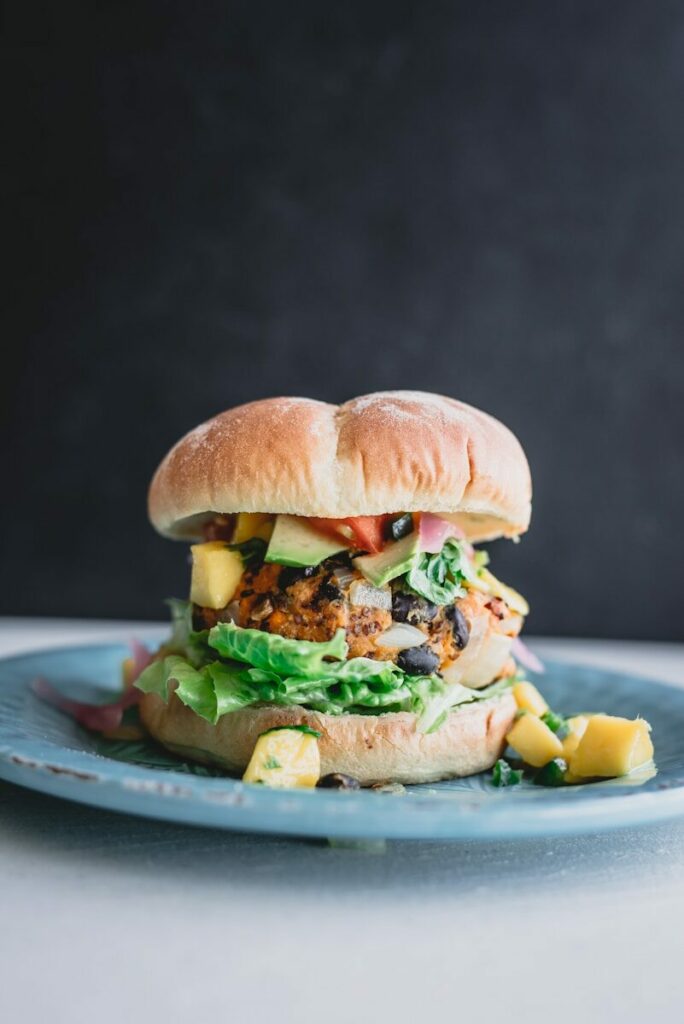
There’s a narrative that “Brits are ditching plant-based eating”, so I thought I’d explore whether this is mostly clickbait…”Is Vegan dead?” or if there’s any truth when it comes to UK eating habits in 2026?
In the first few weeks of 2026, headlines in the UK have claimed that restaurant menus are slimming down on veggie options, supermarkets are scaling back some meat-free ranges and big chains are pushing meat plates to the front of the menu. It’s easy to read that as “plant-based is over”, but I think there’s more nuance than that. There has been a shift in awareness when it comes to food and in my opinion, it’s a shift that has been a long time coming!
It may well be that major fast-food and casual dining chains have reduced the number of vegan and vegetarian options on their menus, but that doesn’t necessarily mean people no longer care about plant foods or plant-based eating.
People are still buying vegetable-based foods that are rich in fibre, like legumes (lentils, chickpeas, beans and pulses) as well as whole-food plant-based proteins like tofu, which is made from soybeans. But there’s a shift for less-processed, WHOLE plant foods over hyper-processed vegan foods like plant-based burgers and sausages.
Here’s the shift I believe is happening in UK Eating Habits in 2026
Ultra-processed meat alternatives are losing their lustre. People have realised that they are paying a premium for expensive, highly engineered products that don’t taste that great and they are also wondering whether these foods are actually healthy options.
As such, WHOLE-food plant proteins are gaining ground. Think beans, lentils, chickpeas, tofu and tempeh….REAL food that you can use to build healthy plant-based versions, rather than bland “frozen vegan burgers”, that are made to look like the real thing and contain a whole load of fillers, additives, preservatives and much more.
Being a flexitarian is far easier to manage day to day and simplicity is key in our busy lives! People are becoming wiser and more selective, opting for balance over strict regimes that avoid large food groups altogether.
Budget and value also matter. When the cost-of-living bites, a bag of lentils and a tin of beans suddenly look a lot more appealing than a £4 plant “burger”!
Environmental and ethical drivers are still of concern, but they are being factored in alongside deeper knowledge and understanding, whilst also being realistic about ensuring health.
From a nutritional viewpoint, this shift makes a lot of sense.
Why does this matter nutritionally?
Nutritionally, many of these engineered products are high in salt and often built from refined protein isolates as well as additives and preservatives.
However, there’s no doubt that whole plant foods do deliver nutritionally, they’re:
- High in fibre, which is crucial for good gut health and also helps to keep blood sugars stable.
- Packed with phyto (plant) nutrients and vitamins/minerals that you don’t get in meat.
- Lower in saturated fat, compared with processed meat alternatives
But looking more closely, there are a couple of significant factors.
The Carbohydrate Connection
Plant-based proteins are high also in carbohydrates and it’s easy for your sugar intake to escalate by eating vegan or plant-based diets, so increasing the risk of weight gain and potentially developing type 2 diabetes.
Protein Quality also matters
One reason meat is regaining favour is the ongoing protein obsession. And to be fair, protein is important. Animal proteins provide:
- All the essential amino acids.
Meat, especially well-sourced lean cuts, delivers complete protein; in other words, all the essential amino acids your body needs and these must come from the diet; your body cannot make them. Plant-based proteins provide some, but not all, so a plant-based diet needs diverse choices to ensure this. That means more consideration when making food choices; you can’t be a haphazard vegan! - Vitamin B12
Vitamin B12 is crucial for red blood cell production, neurological function and energy prodcution but it’s found almost exclusively in animal foods. Those eating predominantly plant-based foods need fortified foods or supplements, as deficiency can take years to show, but has significant consequences. - Highly bioavailable iron and zinc
Animal foods provide haem iron and readily absorbed zinc, making them easier for the body to utilise, This is particularly important for menstruating women and active individuals. Plant sources can absolutely meet needs, but they require a little more dietary strategy to optimise absorption. - Muscle maintenance
For many, especially older adults, peri- and post-menopausal women, or those under-eating, higher-quality protein can be incredibly supportive for muscle maintenance and metabolic health.
If this shift means fewer engineered meat alternatives and more whole-food plant proteins like lentils, chickpeas, tofu, tempeh, nuts and seeds, that’s a step forward for long-term health.
But
you don’t need to choose between meat and plants!
You can combine plant proteins strategically (beans + grains, tofu + seeds) and still meet your amino acid requirements. You can eat moderate amounts of high-quality animal protein alongside a plant-rich base.
You’ll be eating more fibre, both soluble fibre, which is great for keeping cholesterol under control and insoluble fibre, which is good for gut motility. Most adults in the UK are not hitting the recommended 30g of fibre per day. Not even close.
Health outcomes improve when plant intake increases, regardless of whether someone is a vegetarian or not. As we have discovered in the Blue Zones, the areas in the world with the highest concentrations of centenarians, the healthiest dietary patterns globally aren’t meat-free. They’re plant-rich.
So…
So, with this mind shift, I am sensing that plant foods are no longer just a “trend”, they’re becoming foundational. People understand the importance of balance in their food choices and also want simplicity and more freedom….REAL ingredients rather than gimmicky foods that are expensive, not always easy to find and don’t taste good.
That’s a much healthier narrative for UK eating habits in 2026! Has there been a shift in your food choices recently?
You may be interested to read The Wellness Trends I’ve Never Subscribed To | A Sustainable Approach to Health


0 Comments